VAT in 2026: a practical guide for growing UK small businesses
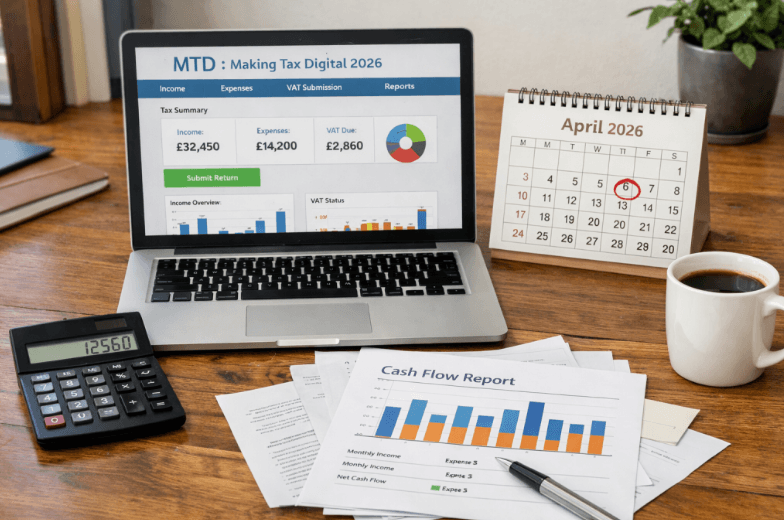
VAT can become a significant financial consideration very quickly for a growing business.
The UK VAT registration threshold remains £90,000 in 2026, which means businesses experiencing strong sales need to monitor turnover carefully rather than relying on annual accounts to identify when action may be required.
For online businesses, the challenge can be even greater.
Ecommerce sellers may process transactions through websites, marketplaces, card processors and overseas platforms. Each system can record sales, refunds and fees differently, creating a financial picture that is far more complicated than the amount eventually deposited into the bank.
Good VAT management therefore begins with accurate transaction records.
Monitor taxable turnover continuously
The registration threshold relates to taxable turnover, not profit.
A business can have relatively modest profits while still approaching the VAT threshold because it is investing heavily in stock, marketing or staff.
Management should therefore monitor turnover during the year.
This becomes particularly important after winning a large contract, launching a successful product or adding another sales channel.
Waiting until the year-end accounts have been prepared can leave too little time to review pricing and prepare the accounting system.
Understand how registration affects prices
VAT can have different commercial consequences depending on who buys from the business.
Where customers are VAT-registered companies, they may generally be able to recover VAT subject to the normal rules.
A consumer-facing ecommerce company may face a more difficult pricing decision.
Increasing prices to include VAT could affect competitiveness. Absorbing VAT within the current selling price can reduce the amount retained by the business.
Management should model the financial impact before registration becomes urgent.
Reconcile ecommerce sales properly
Online businesses should not assume that the amount transferred by a marketplace or payment provider equals sales revenue.
A platform may collect customer payments and then deduct marketplace fees, payment charges, advertising, refunds or other adjustments before releasing the balance.
If the business records only the final deposit, both revenue and expenses may be misstated.
Working with ecommerce accountants helping UK online sellers improve financial control can help businesses organise marketplace reconciliations, VAT records and reporting where several platforms contribute to the accounting process.
Each significant sales channel should ultimately reconcile with the financial records.
Keep digital records organised
VAT reporting depends on the quality of the underlying records.
Sales invoices, supplier invoices, refunds and credit notes should be recorded consistently, with appropriate documentation retained.
Businesses should also make sure accounting integrations are transferring data correctly.
Automation can save substantial time, especially for online sellers processing thousands of orders, but an integration error can also repeat across a large number of transactions.
Regular checks remain necessary.
Protect cash intended for VAT
A growing business can make the mistake of viewing its bank balance as entirely available for operating expenditure.
Where customer receipts include VAT, part of that cash may ultimately be payable to HMRC after the relevant calculation.
If those funds are used for stock, payroll or advertising, the business can experience pressure when the VAT payment becomes due.
A rolling VAT estimate helps management understand the likely liability before the end of the reporting period.
This can then be built into the wider cash-flow forecast.
Review marketplace fees and margins
VAT management should not be separated from profitability.
Online marketplaces and payment providers can charge several different fees, while advertising and fulfilment costs may also increase as sales grow.
Management should understand the margin that remains after considering product cost, platform fees, payment processing, delivery and marketing.
A product generating high revenue may still produce a weak contribution if these costs have increased substantially.
Accurate accounting information allows the business to see where growth is commercially worthwhile.
Monitor refunds and returns
Returns can have a major effect on both financial reporting and cash.
A business may refund the selling price while also absorbing delivery, handling and processing costs.
If returned products cannot be resold at full value, the financial impact becomes even greater.
High return rates should therefore be monitored by product or sales channel where practical.
VAT records also need to reflect refunds and credit notes correctly.
This is another reason ecommerce bookkeeping should remain current rather than being reconstructed at the end of a VAT period.
See also: Hexarelin: Three Ways to Take It, One Question I Couldn’t Get Answered
Review international activity before expanding
Selling outside the UK can introduce additional VAT and customs considerations.
The correct treatment may depend on where goods are located, where customers are based and how the transaction is structured.
Businesses should avoid assuming that every international sale receives identical treatment.
A company preparing to use overseas warehouses, international marketplaces or new fulfilment arrangements should review the accounting and tax position before transaction volumes grow substantially.
Correct setup at the beginning is generally easier than correcting thousands of transactions later.
Use VAT data to understand growth
VAT records contain useful information about the development of the business.
Changes in taxable turnover can show how quickly sales are growing. Purchase records can reveal increasing supplier costs, while marketplace reconciliations can highlight rising fees.
Management should therefore use the same data for commercial analysis.
A VAT Return may be a compliance requirement, but the underlying records can contribute to decisions about pricing, stock, marketing and expansion.
Review processes as volumes rise
A business processing a few hundred transactions may be able to rely on relatively simple controls.
That process may become inefficient when transaction volumes reach thousands each month.
Bookkeeping frequency, software integrations and reconciliation procedures should be reviewed as the company grows.
Responsibilities should also be clear.
Management should know who checks marketplace balances, who reviews refunds and who confirms the VAT information before submission.
Final thoughts
VAT management in 2026 requires more than knowing the registration threshold and submitting returns on time.
Growing UK businesses need accurate sales records, dependable reconciliations and enough cash reserved for future liabilities.
For ecommerce companies, marketplace fees, refunds, payment providers and international trading can make the process significantly more complex.
Businesses that build VAT into everyday bookkeeping gain more than stronger compliance.
They also gain better information about turnover, margins and cash flow, helping them determine whether online growth is translating into sustainable financial performance.